University of Iowa research shows more personal than professional use of AI tools
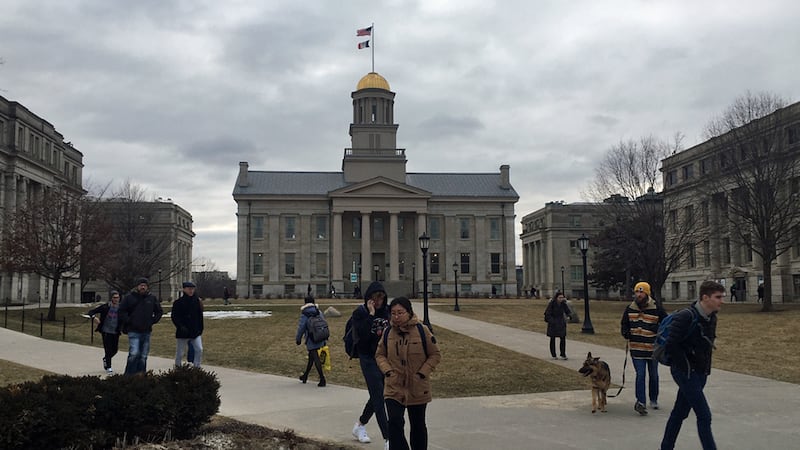
IOWA CITY, Iowa (IOWA CAPITAL DISPATCH) - A survey developed by University of Iowa business researchers and sent across the U.S. has yielded surprising results as to how people are using artificial intelligence tools in their personal and professional lives, prompting a drive to dive deeper.
Ken Brown, a professor of management in the UI Tippie College of Business, worked with UI College of Education professor Brian An and management doctoral student Drew Jauron to create a survey asking people in the U.S. where and when they use AI tools, if at all, what tools they were using and for what purpose.
While the survey provided some answers as to how AI is being used and by whom, Brown said it generated just as many new questions.
“It’s such an important phenomena, it’s become integrated into our lives, but also lots of the research in this area has been very spotty, only focusing on work or home or one program,” Brown said. “We polled 1,000 people to understand, across programs and across contexts, how people were using them.”
Brown said the team worked with the UI Center for Social Science Innovation to connect with national survey company Verasight, which handled sending out the survey and getting the data to the UI researchers.
The team is still working on analyzing the data, Brown said, but even initial responses have surprised the researcher.
Of those who responded that they do use AI tools, more than 50% said they use it for personal activities and projects and one-third said they use it at work. The likelihood of personal use remained higher than that of professional use even among full-time employees.
When it comes to professional settings, Brown said AI usage could be impacted by the requirements and restrictions of the employer. Those who run businesses may not be looking for replacements to the processes and programs that currently work, he said, seeing AI as an investment of time and money rather than a quick-help tool as it may be seen by those who use it for personal projects.
Just over one quarter of the survey respondents were retirees, Brown said — the second-largest surveyed group behind full-time employees. Only 16 out of the 264 retiree respondents said they had not heard of or used any AI tools — just 6%.
ChatGPT and Gemini were the most popular tools for retirees, Brown said, with 71% of respondents saying they used one or the other.
Brown said An told him that his own retired parents use ChatGPT almost like a search engine, from checking recipes and the news to looking up more information on things they hear and see.
“It’s become, I think … part of the reason that we’re seeing massive utilization and data centers going up,” Brown said. “It’s become a daily tool for quite a few people, not just at work, but at home, to answer personal questions, work on little projects, do some learning to try to learn more about something they’re interested in.”
There wasn’t any “huge disparity” between the respondents who use AI for home over work, but one trend Brown said he wonders if he’s seeing in the data is of younger people acting as “conscientious objectors.” Retirees were found in the survey to use AI tools for personal activities more than students, he said.
Brown said he believes there is a population of young people who hold concerns about AI’s accuracy and environmental impact, and who may prefer to use a Google search or Reddit forum to find the answers to their questions over ChatGPT.
“This is not a huge thing coming out of our data, but I think it may also explain the idea of retirees sort of jumping in even more than young people and students, because it’s readily available, it provides pretty easy, digestible answers,” Brown said.
The survey did not prompt respondents who indicated they don’t use AI tools to explain their reasoning, something Brown said he expected would have brought about “extremely interesting” results. He doesn’t believe that lack of access is as big of a barrier now as it could have been in the past, with free accounts available and readily accessible technology.
Objections to the technology, as well as plain disinterest, are more likely factors driving nonuse, Brown said.
As the group continues to look at the data they’ve gathered, Brown said he wants to dive deeper into student use of AI in schools and the impacts it’s making on the school environment and their learning and relationships. Like social media before it, Brown said AI chatbots and other tools have the potential to detract from real-world relationships and other connections, a possibility he wants to study.
“I would love for technology to be a tool that helps people lead better lives, but … if it becomes a sort of black hole of time and energy, you may be learning things but becoming more disconnected from people around you, which could be detrimental to your mental health,” Brown said.
Copyright 2026 IOWA CAPITAL DISPATCH. All rights reserved.